HOA Yard Waste and Bulk Trash Pile Violation in Palm Beach County: What the Notice Means and How to Close It
Updated November 5, 2026 • 11 min read
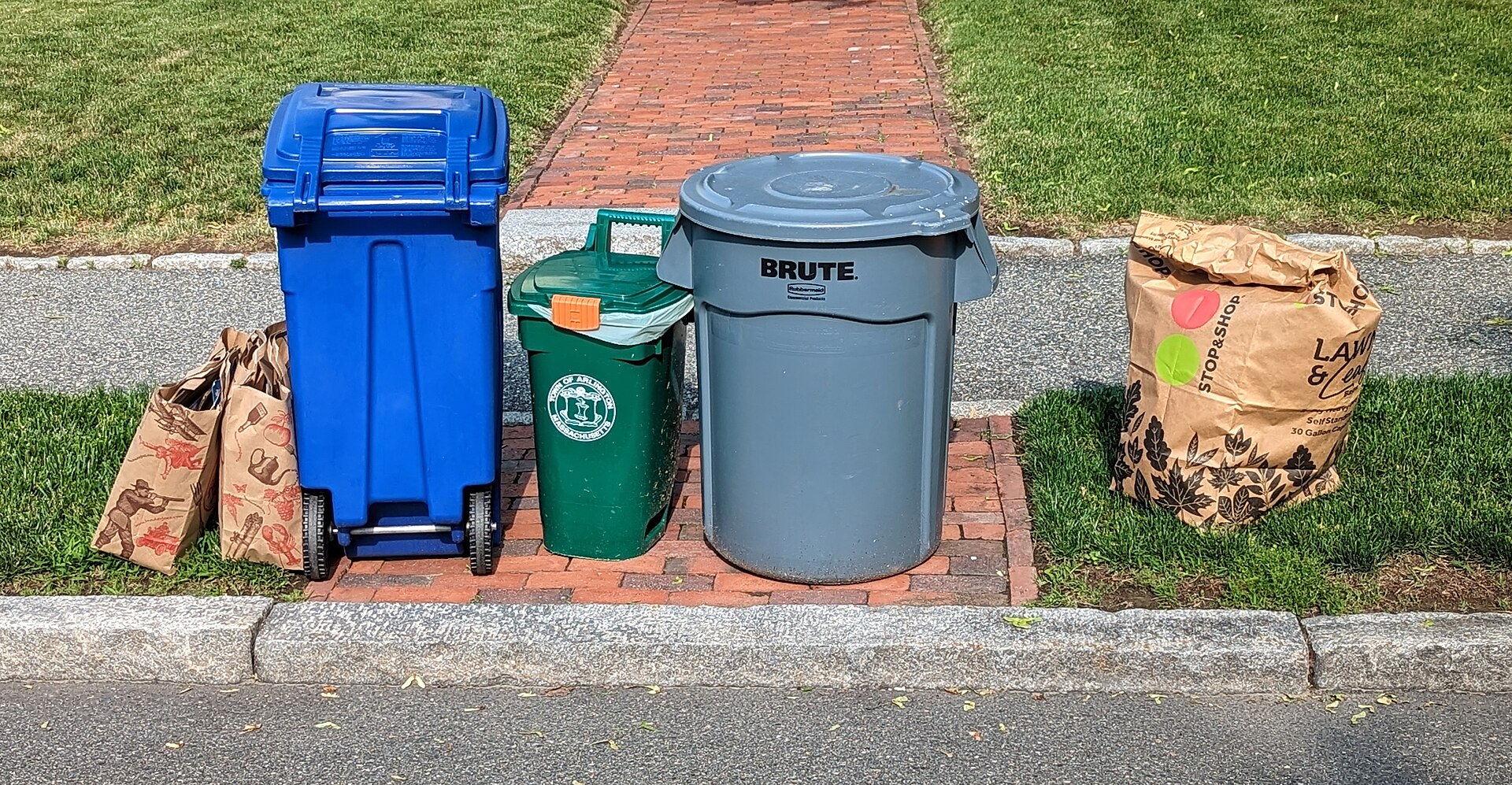
A notice about a pile at the curb usually means one of three things: yard waste (branches, palm fronds, bagged clippings) that has sat past its pickup day, a bulk item such as furniture or an appliance left out too long, or debris from a landscaper or contractor that nobody hauled away. Three sets of rules are in play at once: your HOA’s documents, Florida Statute §720.305 (which controls how a fine can be imposed), and the Solid Waste Authority’s pickup guidelines (which decide what the hauler will actually take). Most of these notices close with a pile that is gone and a few dated photos.
There is also a timing issue specific to right now. The Solid Waste Authority of Palm Beach County says its new collection contracts began October 1, 2026, that some residents have new collection days, and that it is aware of collection delays in some communities. If your pile is sitting there because the hauler did not come, the notice is a different problem from one about a pile you never put out for pickup. This guide explains how to tell the difference, what the SWA rules say, and how to answer the HOA.
Step One: Work Out Which Kind of Pile the Notice Means
Notices rarely say. They cite “trash,” “debris,” “unsightly condition” or “nuisance.” Ask for the specific rule, the date and a photo if the notice does not include them, then match it to a row:
| What the notice says | What it usually means | Typical way to close it |
|---|---|---|
| “Yard debris” / “vegetation” at the curb | Branches, palm fronds or clippings left out, or left after the collection day | Confirm your collection day, cut and stack to the SWA limits, or arrange removal; dated photos |
| “Bulk trash” / “furniture” / “appliance” | A bulk item put out early or left after pickup | Remove or use the correct pickup day and item limits; photograph it gone |
| “Contractor debris” / “construction materials” | Remodel, fence or roof debris at the curb, which is not ordinary household trash | Haul it with the contractor or a permitted hauler; see our construction dumpster guide |
| “Missed pickup” and the notice arrived anyway | The pile was set out correctly but the hauler did not collect it | Report the miss to the SWA or your city, send the HOA a written reply with dates |
| Pile on a common area, vacant lot or neighbor’s lot | Debris dumped or pushed off your lot, which can read as illegal dumping | Remove it now and stop; see the illegal dumping warning below |
What the Solid Waste Authority Says Will and Won’t Be Picked Up
The SWA’s pickup guidelines page sets out the rules for unincorporated Palm Beach County. If you live in a city, town or village, the SWA says to contact your municipality instead, and those rules may differ. In unincorporated areas, the guidelines include:
- Set-out time. Yard waste goes to the curb on your regular day by 6 a.m., and piles must not block the roadway, sidewalks, mailboxes, fire hydrants or storm drains. Residential collection runs between 6 a.m. and 5 p.m.
- Leaves, trimmings and needles. Debris such as leaves, tree and hedge trimmings and pine needles should be containerized, preferably in a garbage can, paper lawn and refuse bags or plastic bags.
- Branches and fronds. Tree branches and palm fronds are stacked neatly at the curb in a pile that does not exceed six cubic yards (12 cubic yards in Service Area 3 only), under the amended ordinance the SWA cites as effective October 1, 2026. Branches must be cut to no more than six feet and no more than fifty pounds each to allow manual loading. Palm fronds can be any length.
- Oversize piles. A pile that exceeds the limit will not be serviced at all. It is tagged and photographed, the information goes to SWA Customer Information Services, and the owner must arrange removal. The SWA says tagged piles must be removed within 30 days of the original tag to avoid further action or financial penalties.
- Paid removal. For a pile over the limit, the SWA says to call Customer Information Services at 561-697-2700 for an estimate. The contract rate is $10 per cubic yard, with removal within 72 hours of payment. You can also hire any contractor.
- Bulk items. Bulk pickup is once a week and limited to three items on your scheduled bulk collection day. If more than three are out, the hauler removes three and tags the rest. Items should not be stacked on water or gas meters, under low branches or utility wires, or within three feet of mailboxes or fire hydrants.
- Appliance safety. Doors on appliances such as refrigerators, freezers, washers and dryers must be removed or sealed so children cannot crawl inside.
- Not collected curbside. Household hazardous waste such as used oil, batteries, propane cylinders, paint and pesticides is never collected curbside. Fencing is not part of weekly yard waste, bulk or construction debris collection.
- Minor repair debris. Construction and demolition debris from minor home repairs is limited to two cubic yards per week, collected on your bulk day, in containers of 50 gallons or less weighing under 50 pounds when filled, with carpet cut into four-foot rolled bundles.
Two practical readings follow. First, the most common reason a pile stays at the curb is that it did not meet the rules, so the hauler left it: loose leaves on the grass, branches longer than six feet or a bulk item over the weekly three. Second, because the SWA says new contracts began October 1, 2026 and collection days have changed for some residents, a pile set out on last year’s day may sit for a week through no fault of the owner. Check the current schedule before you answer the HOA.
Need to answer the notice this week?
Our free HOA Response Generator drafts a reply that acknowledges the notice, asks for the specific rule and the evidence, and states the dates the pile went out, the pickup you requested and the cleanup you have done.
Draft My HOA Response →What Chapter 720 Lets the HOA Do, and What It Doesn’t
Rules about trash and debris live in your declaration and the rules the board has adopted, often a trash or garbage section, a general nuisance clause or an exterior-maintenance clause. Chapter 720 supplies the enforcement framework:
- Fines. §720.305(2) allows reasonable fines for violations of the declaration, bylaws or reasonable rules. Unless the governing documents provide otherwise, a fine may not exceed $100 per violation, and a continuing violation may be fined per day with a single notice and opportunity for hearing, but not above $1,000 in the aggregate unless the documents provide otherwise. A fine of less than $1,000 may not become a lien against your home.
- Notice and hearing. §720.305(2)(b) requires at least 14 days’ written notice of your right to a hearing before a fine or suspension is imposed. The notice must describe the alleged violation and the specific action required to cure it, and the hearing must be held within 90 days before a committee of at least three members who are not officers, directors or employees, or their close relatives. The committee’s role is limited to confirming or rejecting the fine.
- Cure. §720.305(2)(e) says that if a violation is cured before the hearing, or in the manner specified in the written notice, a fine or suspension may not be imposed.
- Written findings and payment date. Within 7 days after the hearing, the committee must send written findings. If a fine is approved and the violation is not cured, the payment date must be at least 30 days after that written notice.
One more subsection is worth reading closely. §720.305(7)(a) says an association may not levy a fine or impose a suspension for leaving garbage receptacles at the curb or end of the driveway within 24 hours before or after the designated garbage collection day or time, notwithstanding anything in the governing documents. That protects a garbage can. It does not say anything about a pile of branches or a couch, so do not assume the same grace period applies. If your documents allow citing a pile left out for days, the safe approach is to put it out on the right day and get it gone quickly.
For a pile, “cured” is easy to prove: it’s gone, and you have a dated photo. Read the cure language in your notice, then answer it in writing before the hearing deadline. Our guides on curing a violation before the hearing and the hearing process cover how a cure is documented and what happens at the committee meeting.
Landscaper and Contractor Debris
Many pile notices are really contractor notices. A crew trims a hedge or cuts back palms, bags some of it and leaves the rest at the curb. The SWA’s own page speaks to this: if a vegetation pile exceeds the limit, you can hire any contractor to remove it, and if you have hired a commercial landscaper you should make sure removal is included in their quote. The practical rules are simple.
- Put hauling in writing. The work order should say who removes the debris and by when.
- Ask for the receipt or dump ticket when a contractor hauls material for you, and keep it with your photos.
- Check the size before the crew leaves. A big trim can exceed six cubic yards by itself, and an oversize pile gets nothing picked up.
- Large removals are a different category. If the work is tree removal, see our tree removal guide; for fronds, see palm tree trimming.
- Remodel and roof debris. Anything beyond minor repair debris needs a container or a permitted hauler; our construction dumpster guide covers how HOAs treat roll-offs.
Do Not Move the Pile: Illegal Dumping Is a Separate Problem
When a pile draws a notice, the tempting shortcut is to push it into the preserve, onto a vacant lot or into a common-area dumpster. Don’t. The SWA says illegal dumping is punishable by up to a $10,000 fine and 5 years in prison, and asks residents to report it: in unincorporated Palm Beach County, contact the Palm Beach County Sheriff’s Office at 561-688-3000, then call the SWA with the case number; in a municipality, contact your local law enforcement agency. A pile that moves from your curb to somebody else’s property turns an HOA notice into a legal problem. Take it to a proper facility, hire a hauler or wait for the correct pickup.
How to Close a Pile Violation Fast
- Read the notice for the rule, the date and the cure. If any of the three is missing, ask for it in writing.
- Photograph the pile now, with the date visible, including any hauler tag. The photo shows what the HOA saw and what you did about it.
- Confirm your collection day. Use the SWA’s My Service Collection Days tool in unincorporated areas, or your city’s schedule, because days changed for some residents after October 1, 2026.
- Fix what made it non-conforming. Containerize loose leaves, cut branches to six feet or less, split an oversize pile or reduce bulk items to three.
- Remove it if it won’t be collected. Use the SWA’s removal estimate at 561-697-2700, a contractor or a drop-off facility, and keep the receipt.
- Report a missed pickup to the SWA at 561-697-2700 or to your city if you live in a municipality, and note the date and any reference number.
- Reply to the HOA in writing with your photos, receipts and the dates, and ask the board to confirm that the file is closed.
- Save everything. If a hearing is scheduled anyway, bring the photos, receipts and your written reply.
Common Mistakes That Turn One Notice Into Fines
- Putting the pile out days early. A pile that appears the weekend before a Thursday pickup is visible for five days. Set it out on your day, by 6 a.m.
- Assuming the 24-hour trash can rule covers piles. §720.305(7)(a) is limited to garbage receptacles.
- Leaving loose leaves on the grass. The SWA wants them containerized, and loose piles are exactly what gets left behind.
- Overloading bulk day. The hauler removes three items and tags the rest, and the tagged items stay on your curb.
- Mixing categories. Paint, batteries, propane and pesticides never go curbside, and fencing isn’t part of weekly collection.
- Ignoring the notice because the hauler is at fault. The hearing clock still runs. A short written reply with dates keeps you in the process; see our guide to trash can violations for the garbage side of the same question.
- Dumping it somewhere else. See the illegal dumping warning above.
If Fines or a Suspension Are Proposed
Under §720.305(2)(b)–(f), you get at least 14 days’ written notice of the hearing, the committee decides by majority vote whether to confirm or reject the proposed fine or suspension, and it must send written findings within 7 days after the hearing. Bring your photos of the pile before and after, the SWA tag if there was one, the report number for a missed pickup, any contractor receipt and your written reply. A committee looking at an owner who documented a missed pickup and removed the pile has an easy reason to reject the fine. Our guides on HOA fines in Florida and landscaping violations cover the rest of the process.
Frequently Asked Questions
Can my Florida HOA fine me for a yard waste or bulk pile at the curb?
It can try if your declaration or rules cover it, usually through a trash, nuisance or exterior-appearance clause. Florida Statute 720.305(2) allows reasonable fines for violations of those documents, capped at $100 per violation unless your documents say otherwise, with continuing violations capped at $1,000 in the aggregate unless the documents say otherwise. A fine of less than $1,000 can't become a lien. Before any fine, the board must give at least 14 days' written notice of your right to a hearing before a committee of at least three members who are not officers, directors or employees, and if you cure the violation before the hearing or in the way the notice specifies, a fine can't be imposed.
How big can a yard waste pile be in unincorporated Palm Beach County?
Under the Solid Waste Authority's current guidelines for unincorporated Palm Beach County, branches and palm fronds are stacked neatly at the curb in a pile that does not exceed six cubic yards (12 cubic yards in Service Area 3 only), with branches cut to no more than six feet and no more than fifty pounds each; palm fronds can be any length. Leaves, hedge trimmings and pine needles should be containerized in a garbage can or in paper or plastic bags. The SWA cites Amended Ordinance 2026-014 beginning October 1, 2026. If you live in a city, town or village, check with your municipality, since its rules may differ.
The hauler missed my pickup and the HOA cited me. What now?
Document it and report it. The SWA says its new collection contracts began October 1, 2026 and that it is aware of collection delays in some communities. It tells residents to confirm their current collection days with the My Service Collection Days tool and to call Customer Information Services at 561-697-2700 about a missed collection. Send the HOA a short written reply with the date the pile was set out, the date of your report and any reference you were given, and ask for the notice to be held while the pickup is resolved. A pile that is waiting on a hauler is a different fact pattern from one left to rot.
Does the 24-hour rule for trash cans protect a yard waste pile?
Not by its terms. Section 720.305(7)(a) says an association may not fine or suspend for leaving garbage receptacles at the curb or end of the driveway within 24 hours before or after the designated garbage collection day or time. It does not mention yard waste piles or bulk items, so don't assume the same grace period applies. Put the pile out on your designated day, not days early, and bring any container in promptly.
Who has to haul away debris from my landscaper or tree trimmer?
Settle it in the quote. The SWA's yard waste page says that if a pile exceeds the limit you can hire any contractor to remove the material, and that if you have hired a commercial landscaper you should make sure removal is included in their quote. Write down in the work order that the contractor hauls away what the job generates, and keep the receipt. A crew that leaves a pile for the curb can leave you with the HOA notice.
What happens to a pile the hauler tags?
The SWA says piles that exceed the weekly limit or don't conform to the rules will have no portion of the pile serviced and the owner is responsible for removal. Such piles are tagged and photographed, and the information is forwarded to SWA Customer Information Services; the ordinance language the SWA quotes says a tagged pile must be removed within 30 days of the original tag to avoid further action or financial penalties. The SWA offers removal for a contract rate of $10 per cubic yard, with removal within 72 hours of payment, or you can use any contractor. Photograph the tag and the pile before and after removal.
Got a yard waste or bulk pile notice?
Tell us what the notice cites and your city, and we’ll lay out the removal, pickup and response path and the documentation your HOA needs to close the file.
Get My Fix Plan →Sources: Fla. Stat. §720.305(1)–(7) (2026), Online Sunshine / The Florida Senate; Solid Waste Authority of Palm Beach County, Pickup Guidelines (unincorporated Palm Beach County: yard waste, bulk, construction debris, household hazardous waste, illegal dumping, collection transition notice), swa.org, checked November 5, 2026. Collection rules, contracts and service areas change, and cities and towns set their own, so confirm with the SWA or your municipality. This page summarizes public rules. It is not legal advice. Your declaration, your city or county, and a Florida attorney control how these rules apply to you.